The $156 Million Pokémon Card: Why Grey Felt Hat Pikachu Is Becoming an Institutional Asset

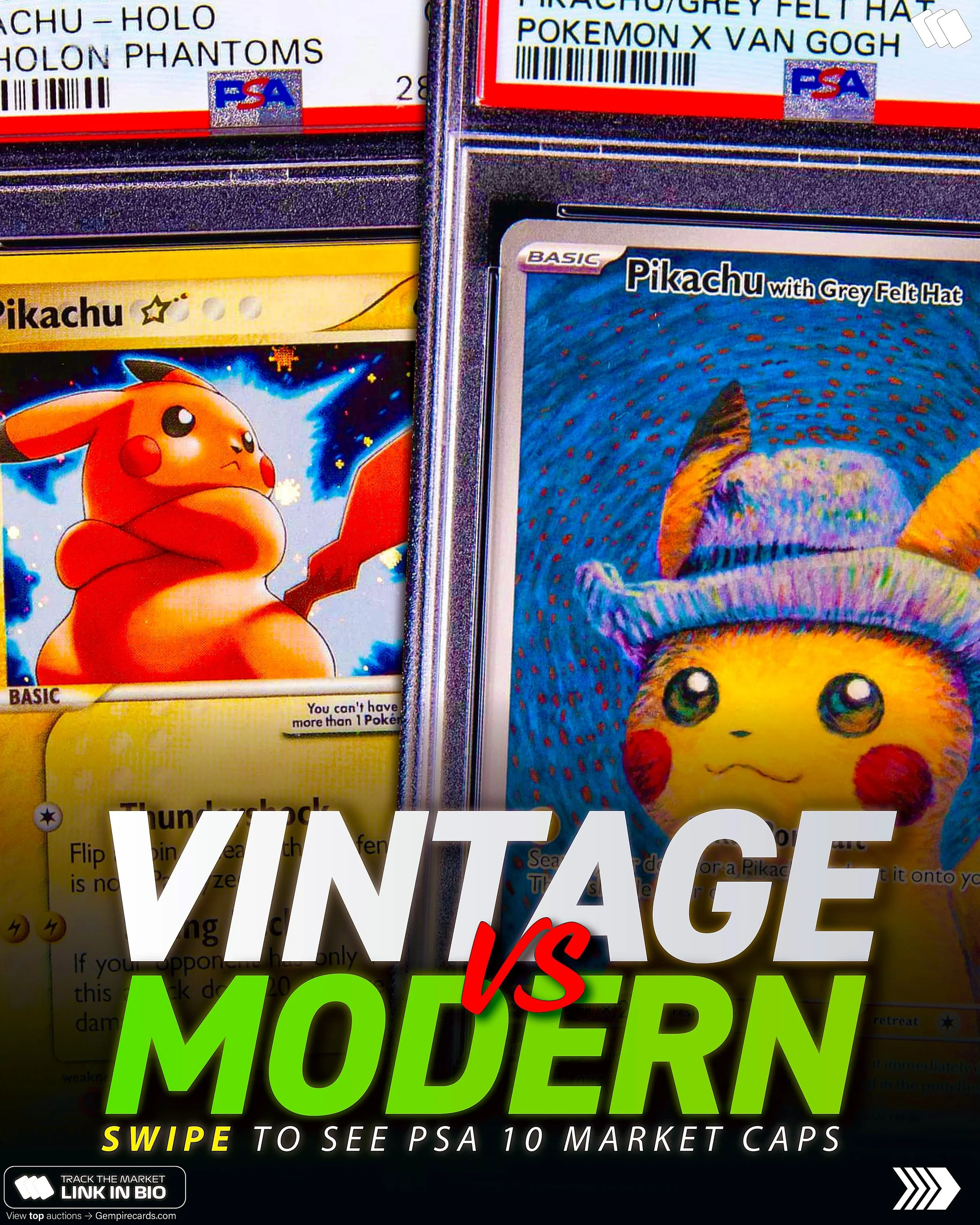
The Pikachu with Grey Felt Hat is no longer just one of the most recognizable modern Pokémon promos. It is now becoming a test case for whether trading cards can be treated like institutional-grade alternative assets.
Released in 2023 through the collaboration between Pokémon and the Van Gogh Museum in Amsterdam, the card quickly became a global phenomenon. Collectors lined up for the promotion, demand overwhelmed the release, and the card became one of the defining modern Pokémon stories almost immediately.
Since then, the scale of the card’s population has become almost as important as the card itself.
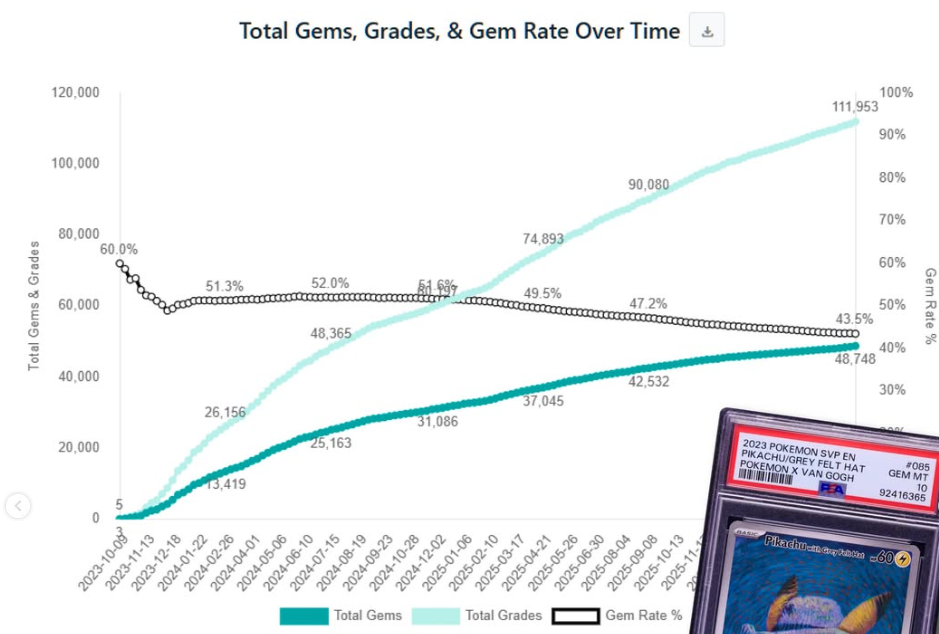
According to the population data shown, PSA has now graded 111,953 total copies of Pikachu with Grey Felt Hat, with 48,748 copies achieving PSA 10. That makes it one of the most heavily graded Pokémon cards ever. Its PSA 10 gem rate sits around 43.5%, meaning this is not a traditionally scarce card in absolute terms.
But scarcity is not the only thing driving markets.
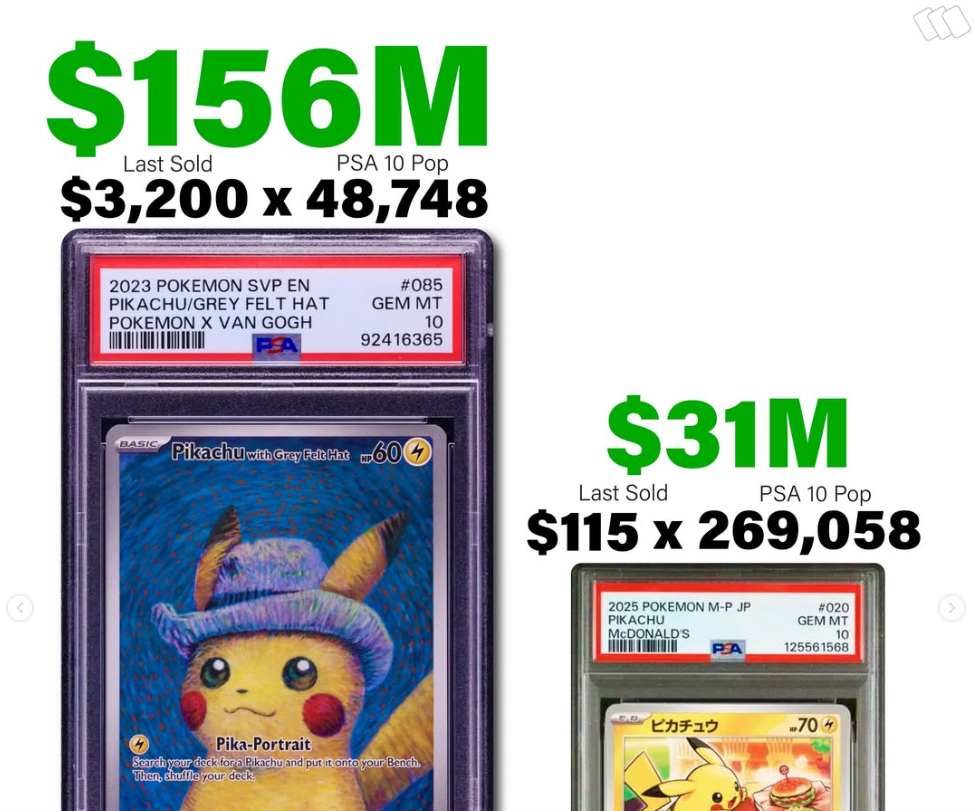
At an estimated average PSA 10 sale price of $3,200, the PSA 10 population alone implies a market capitalization of roughly $156 million. That is an eye-catching number for a single modern promo card, especially one released less than three years ago.
For comparison, the McDonald’s Pikachu has an even larger PSA 10 population, with 269,058 PSA 10 copies shown at an estimated $115 last sold price. That gives it an implied PSA 10 market cap of roughly $31 million. The contrast is sharp: Grey Felt Hat Pikachu has far fewer PSA 10s than McDonald’s Pikachu, but its premium price creates a market value that is dramatically larger.
That is the power of cultural demand.
The card sits at the intersection of Pokémon, fine art, modern collecting, and global nostalgia. It is a Pokémon promo, but it is also a Van Gogh Museum collaboration. That gives it a broader identity than most modern releases. For many collectors, it is not just another Pikachu. It is the flagship card from one of the most memorable Pokémon collaborations ever.
The next major demand catalyst came from institutional interest.

Hong Kong-listed MemeStrategy announced what it described as the world’s first tokenized Pokémon trading card fund, centered around PSA 10 Pikachu with Grey Felt Hat. The fund’s portfolio is anchored around the PSA 10 version of the card and aims to acquire exposure representing approximately 25% of the PSA 10 cards available in the market, according to MemeStrategy’s announcement.
That changes the conversation.
For years, institutional money largely ignored trading cards. The market was driven by collectors, dealers, influencers, auction houses, and high-net-worth hobby participants. But a tokenized fund creates a very different kind of demand structure. Instead of one collector buying one card, a fund can attempt to accumulate thousands of copies, place them into custody, and turn the asset into a financial product.
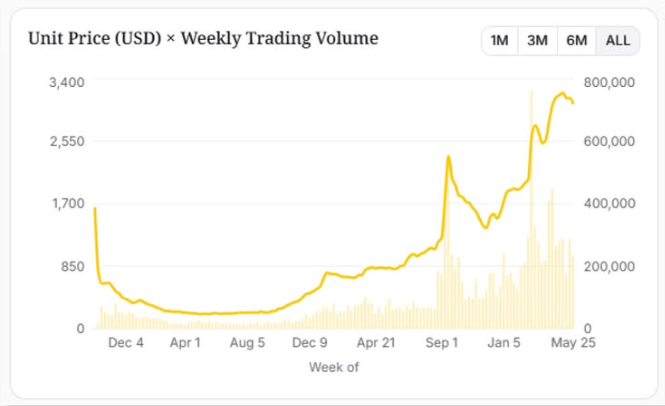
MemeStrategy has also leaned into cultural finance around the card. Grade10’s Hat Price Index tracks PSA 10 Pikachu with Grey Felt Hat as a single-asset cultural index, with the index universe restricted to PSA 10 copies.
That matters because it gives the card something most collectibles do not have: a dedicated price index.
The supply curve is also important. PSA 10 copies have risen relentlessly, climbing to nearly 49,000 gems in under three years. Normally, that kind of supply growth would pressure prices. Yet the card has continued to command a premium because demand has grown alongside supply.
That is the key tension in the Grey Felt Hat market.
On one side, the population is enormous. On the other, the buyer base keeps expanding. Collectors want it. Investors are watching it. Funds are now targeting it. And because the card has become a recognizable cultural asset, its market may not behave like a typical high-pop modern promo.
Still, there is risk.
A $156 million implied market cap depends heavily on the assumed sale price. If prices fall, that number falls quickly. A large PSA 10 population also means liquidity can cut both ways. When demand is strong, supply gets absorbed. But if sentiment cools, there are thousands of copies that could come back to market.
That said, the bigger story may not be only about Grey Felt Hat Pikachu.
The real story is what comes next.
If institutional capital continues entering collectibles, the question is not whether another card fund will launch. It is which card they will choose next. Grey Felt Hat Pikachu may be today’s test case, but tomorrow it could be another blue-chip Pokémon card with a strong narrative, large enough supply, and deep global demand.
For now, Pikachu with Grey Felt Hat has become more than a museum promo.
It has become one of the clearest signs yet that Pokémon cards are moving from collector culture into cultural finance.
For more collectibles news, market moves, and major auction alerts, follow us on Instagram: @gempirecards.