Vintage vs. Modern Pokémon: What Market Cap Tells Us
The vintage vs. modern Pokémon debate usually centers around one thing: price.
Vintage grails can command six figures while their modern counterparts trade for a fraction of that. But when population is taken into account, the comparison changes dramatically.
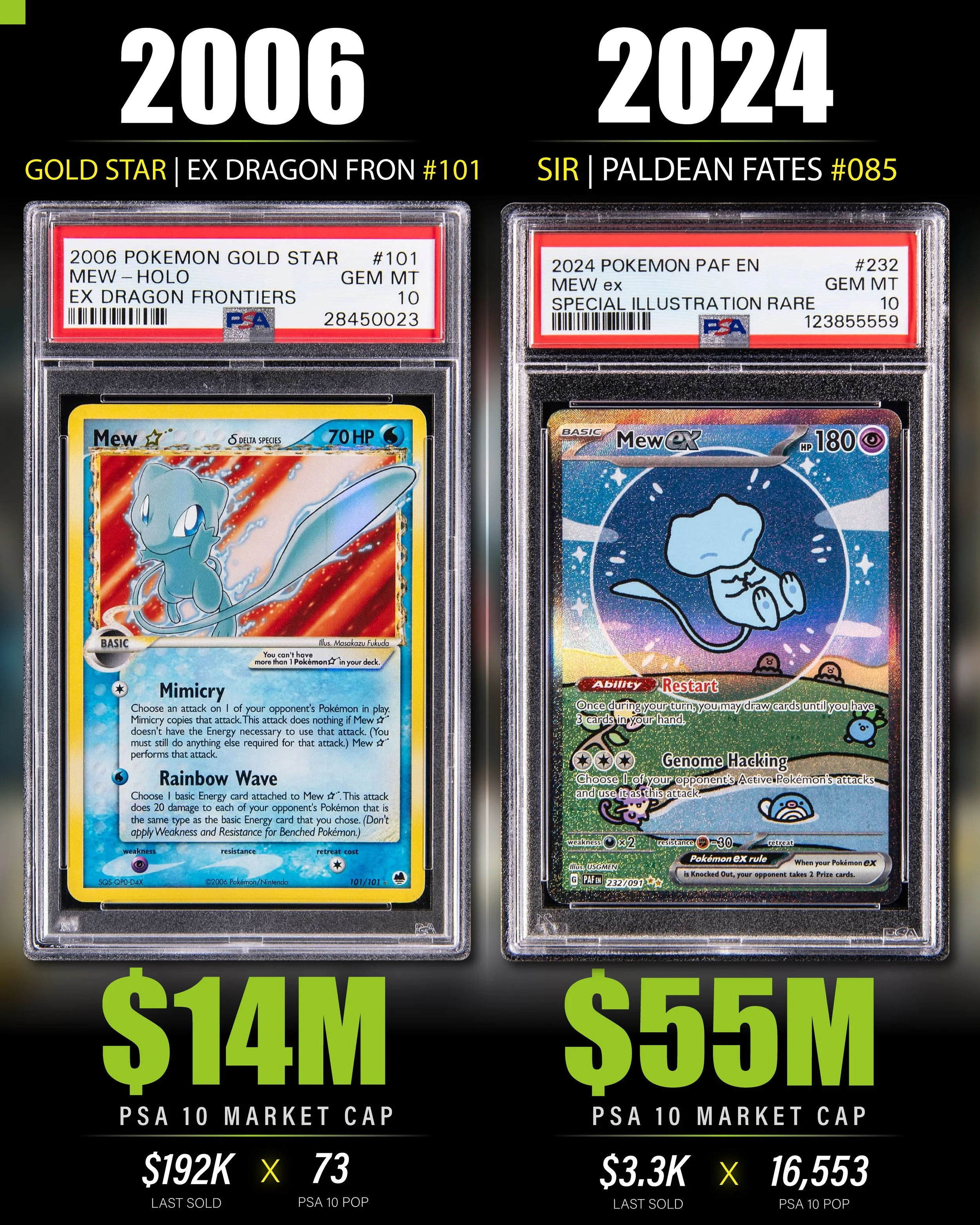
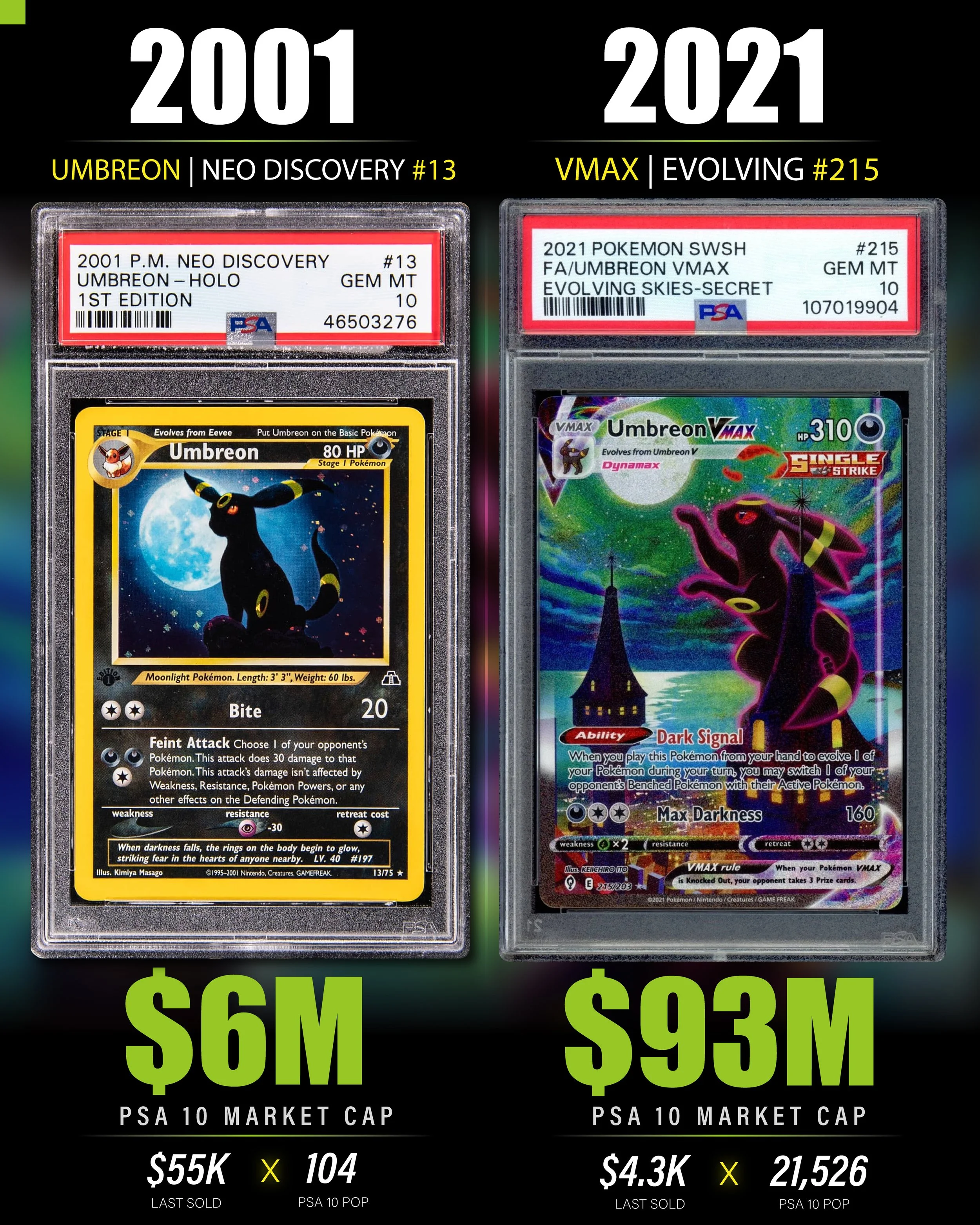
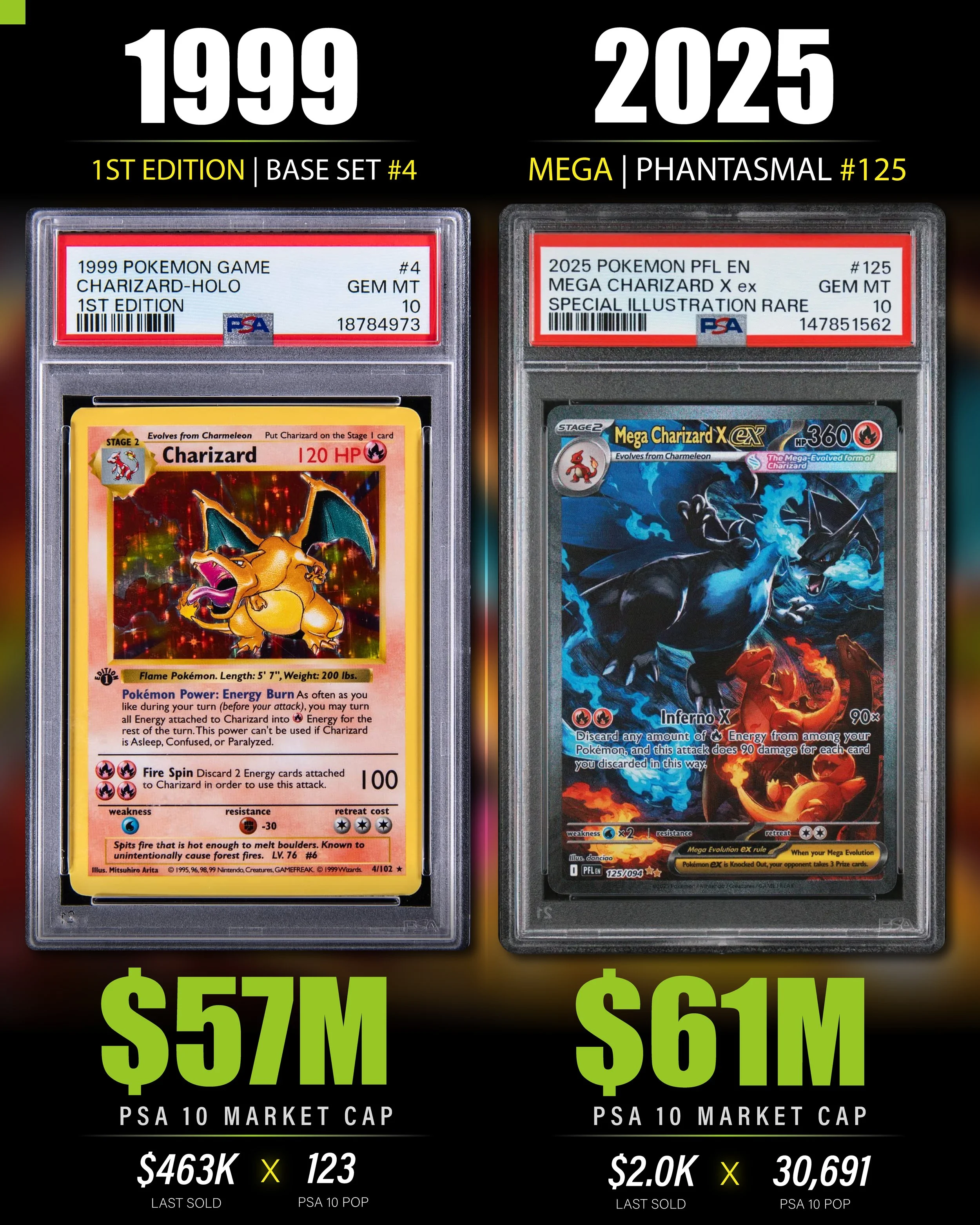
For this analysis, we compared six vintage and modern PSA 10 cards using a simple calculation:
Latest Public PSA 10 Sale × PSA 10 Population = Estimated PSA 10 Market Cap
This isn't a true market capitalization or an estimate of what every copy could actually be sold for. Instead, it gives us another way to visualize the scale of the collector market behind each card.
Vintage Scarcity vs. Modern Scale
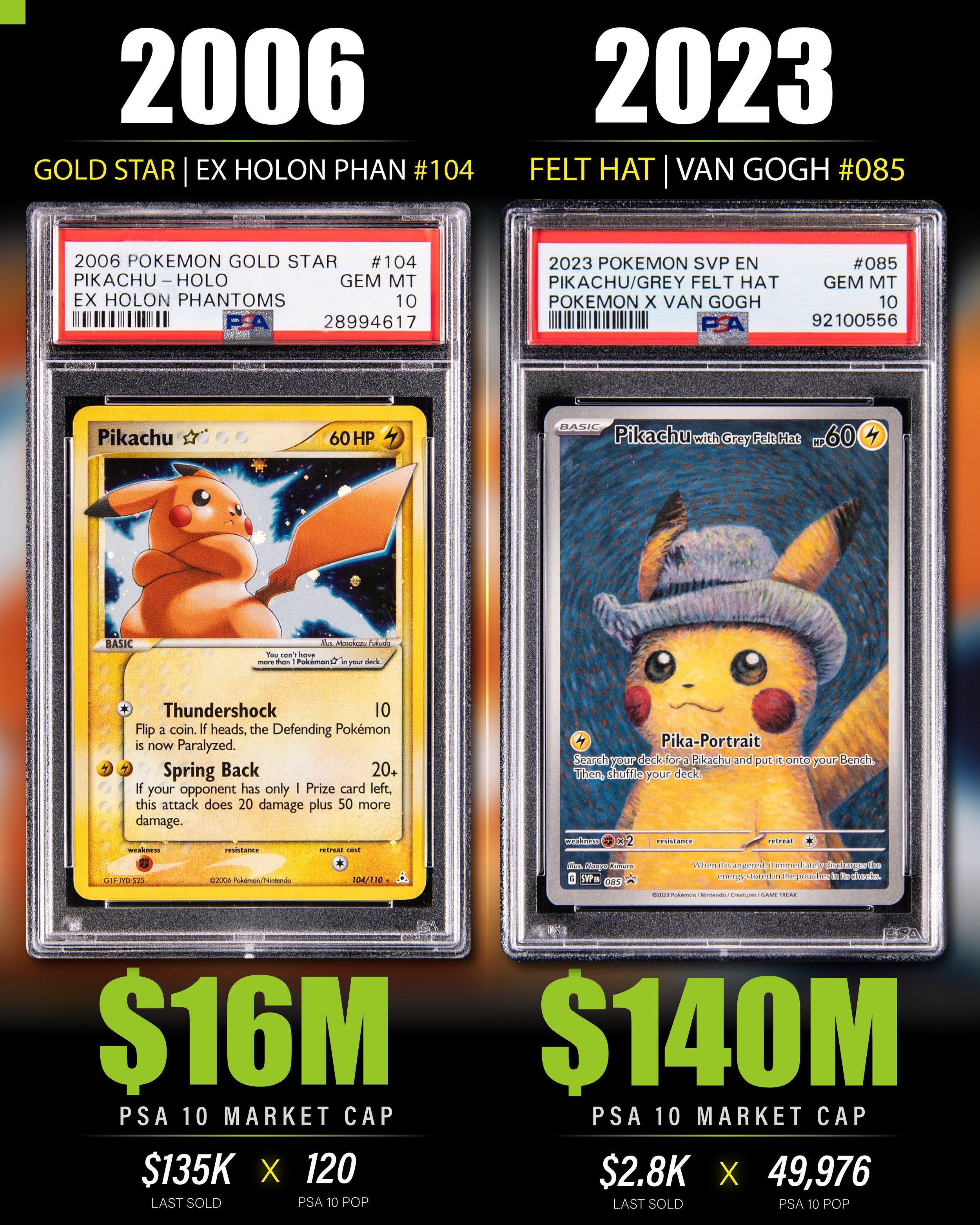
The most dramatic example is Pikachu.
A Pikachu Gold Star PSA 10 last sold for approximately $135,000. With just 120 PSA 10s, that gives the card an estimated PSA 10 market cap of roughly $16 million.
The modern Pikachu with Grey Felt Hat trades for around $2,800 in PSA 10—but with a population of 49,976, its estimated market cap reaches approximately $140 million.
What Does This Actually Tell Us?
The takeaway isn't that modern Pokémon is more valuable than vintage.
It's that the two markets derive value very differently.
Vintage concentrates enormous value into relatively few copies. Modern spreads that value across a dramatically larger population of cards and collectors.
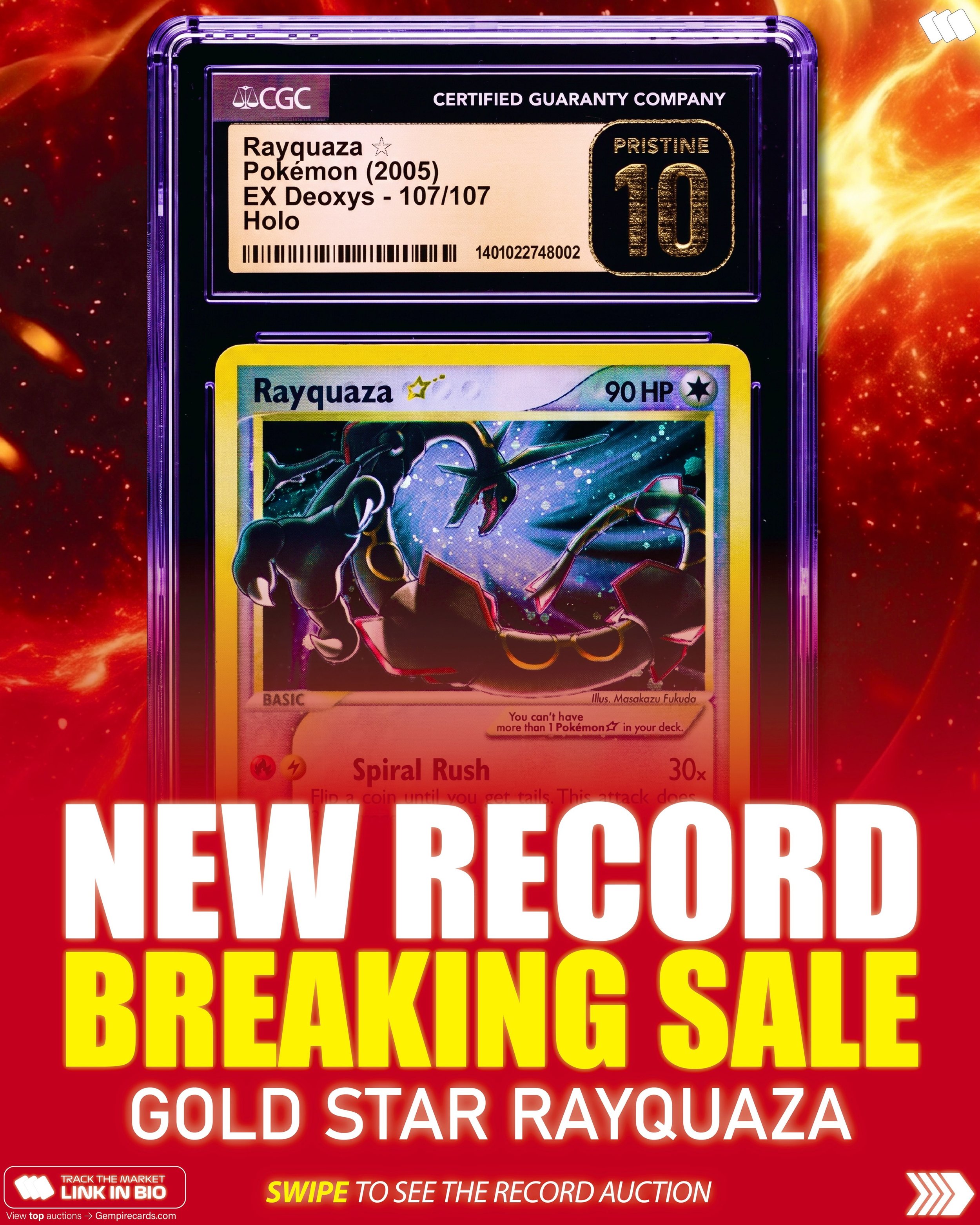
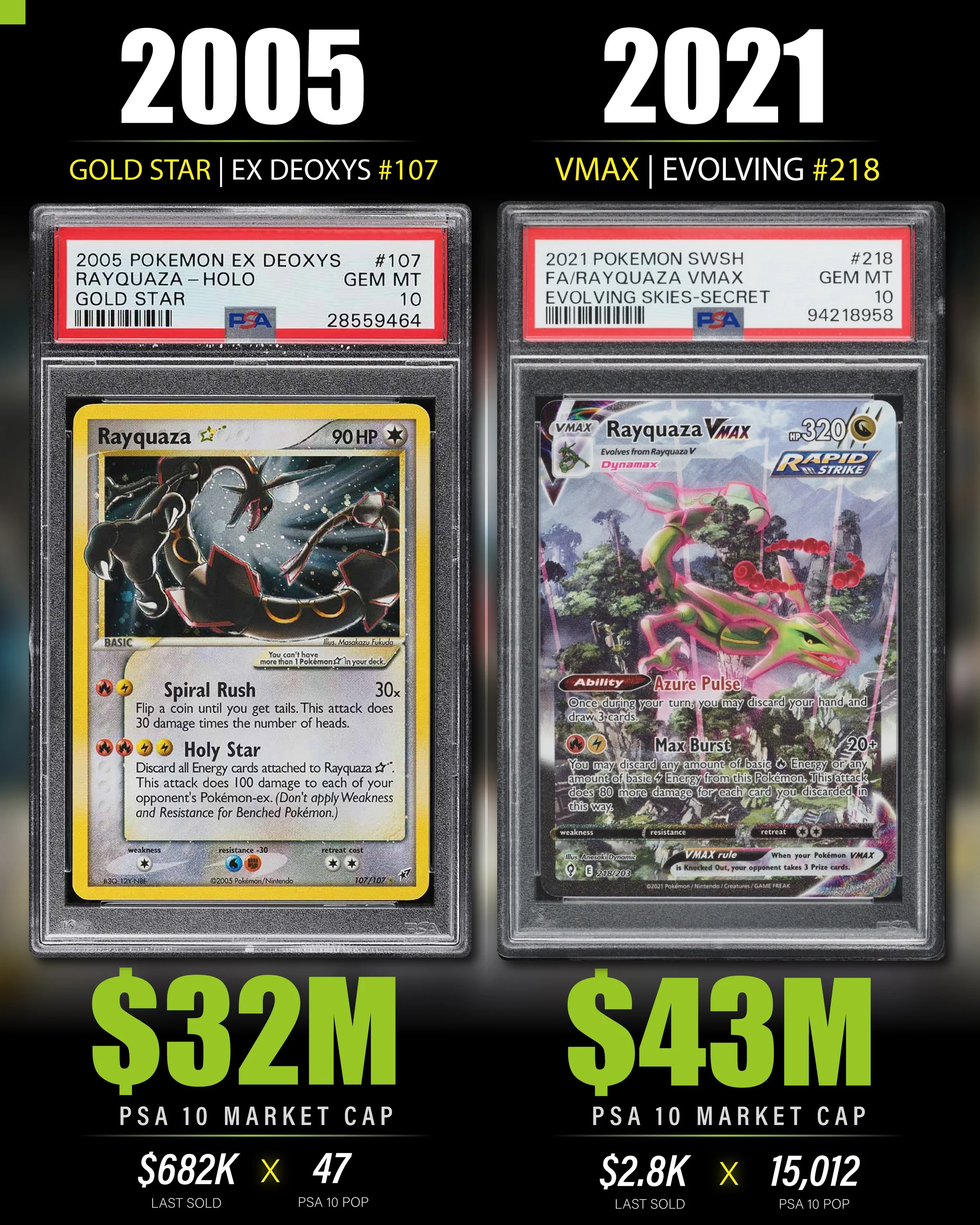
Take Rayquaza. A Gold Star Rayquaza PSA 10 last sold for $682,500, but only 47 PSA 10 copies exist. Modern Rayquaza VMAX is worth far less individually, yet its 15,012 PSA 10 population gives it a larger estimated market cap: $43 million vs. $32 million.
That's the power of scale.
Rarity or Demand?
Ultimately, the comparison comes back to one of the biggest questions in collectibles:
What matters more to a card's value—rarity or demand?
Vintage demonstrates the extraordinary power of scarcity. Modern demonstrates what can happen when collector demand operates at massive scale.
Neither metric tells the entire story on its own. But when we stop looking solely at the price of a single card, the sheer size of the modern Pokémon market becomes difficult to ignore.
The Other Side of Market Cap
There’s also an important distinction between market cap and liquidity. A modern card may have a much larger theoretical market cap because thousands of copies exist, but that doesn’t mean every copy could sell at today’s price. Likewise, an extremely scarce vintage card may have a smaller total market cap while being far more difficult to replace once a collector sells it.
Market cap helps illustrate the scale of each market, but scarcity, liquidity and sustained collector demand ultimately determine how strong that value really is.
For more collectibles news, market moves, and major auction alerts, follow us on Instagram: @gempirecards.